
L2 rollup War heats up! In an epic shift in blockchain strategy during the 2021 bull market, numerous Layer 1 (L1) blockchains tried to challenge Ethereum’s dominance. None succeeded, which led to a shift from direct competition to collaboration. Solana was a key factor in this change.
The Decline of L1 Blockchains
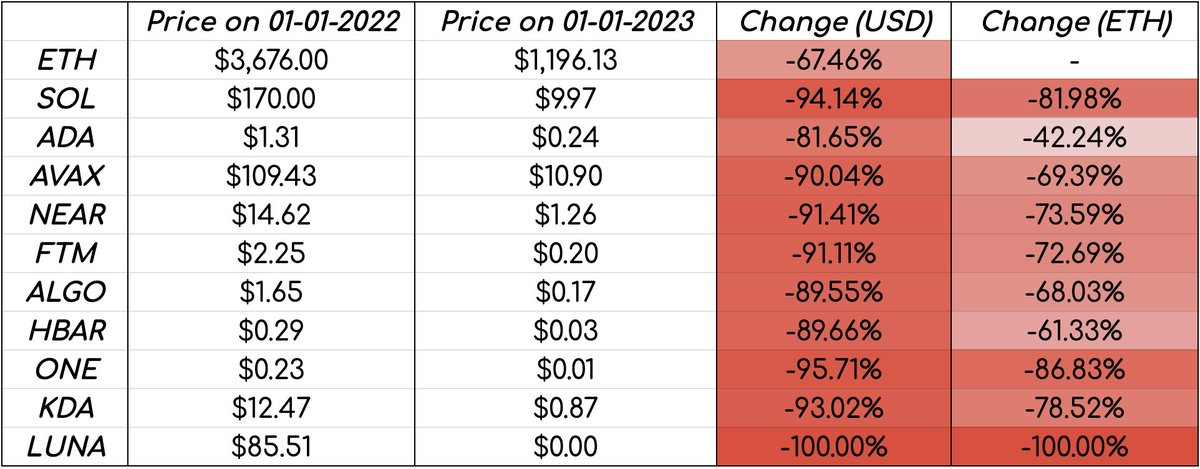
Pavel Paramonov, blockchain researcher at Dewhale Capital, noted that by the end of 2022, most L1 tokens lost over 90% of their value. Despite claims of being faster or more secure than Ethereum, these blockchains struggled to surpass Ethereum’s position. It’s like trying to create a better wallet than MetaMask—users stick with what they know.
Solana’s Unique Success
However, the analyst went deep inside and found that Solana became the most notable non-Ethereum blockchain unlike other non-EVM blockchains such as NEAR, Cardano, Algorand, or Kadena. Despite issues like network outages and controversies, Solana stood out because it focused on user needs and technological advancement, showing a different path from other L1s.
Addressing Fragmentation in Ethereum’s Layer 2 Solutions
Instead of competing with Ethereum, many blockchains turned to building Layer 2 (L2) rollups on Ethereum. This strategy allowed them to leverage Ethereum’s large ecosystem while developing smaller economies. Simple tools like Conduit, AltLayer, and Optimism’s OP Stack have made it easier to create these rollups.
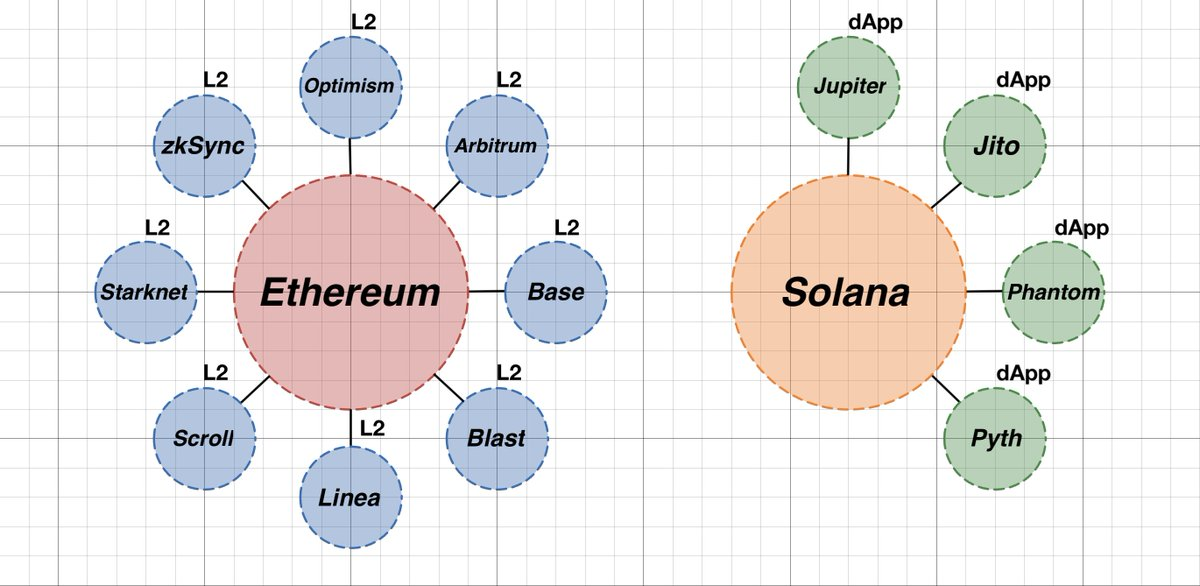
But it was difficult as the variety of L2 rollups has led to liquidity Fragmentation, where each roll-up serves a different purpose—Optimism for scaling, Arbitrum for DeFi, Base for SocialFi, and Metis for DAOs. This fragmentation showed mixed reactions from the Ethereum community and is more of a social than technical problem.
Ethereum vs. Solana
Ever since the roll-up happened, there have been two main competitors: ETH and SOL. Ethereum is called a “sandbox” where developers create various rollups and projects. Developers often focus more on generating liquidity for these rollups than improving the apps. On the other hand, Solana has been more focused on creating high-quality applications, like Jupiter Exchange for swapping and Phantom for wallets.
Solana’s Future Challenges
The analyst further noted that Solana’s current state is similar to Ethereum’s past challenges. Issues such as high transaction fees and network limitations led to the creation of Ethereum L2 solutions. Solana faces similar issues with its architecture, including transaction failures due to bot attacks and inefficient fee mechanisms. While creating L2s on Solana isn’t necessary now, it could become relevant as the network evolves.
Overall, it will be interesting to see if Solana starts an L2 battle in the future like Ethereum, triggering a new L2 solution wave. Stay tuned with us to witness this epic clash.
Earn more PRC tokens by sharing this post. Copy and paste the URL below and share to friends, when they click and visit Parrot Coin website you earn: https://parrotcoin.net0
PRC Comment Policy
Your comments MUST BE constructive with vivid and clear suggestion relating to the post.
Your comments MUST NOT be less than 5 words.
Do NOT in any way copy/duplicate or transmit another members comment and paste to earn. Members who indulge themselves copying and duplicating comments, their earnings would be wiped out totally as a warning and Account deactivated if the user continue the act.
Parrot Coin does not pay for exclamatory comments Such as hahaha, nice one, wow, congrats, lmao, lol, etc are strictly forbidden and disallowed. Kindly adhere to this rule.
Constructive REPLY to comments is allowed